
Old English poets (not T.S. Elliot in his later years but those Anglo Saxon guys before the Norman invasion), when not being hacked up by Vikings or scorched by dragons, would often tear up in the presence of Roman ruins. They’d plop down on a shattered stone, marble shard or something, take in all the decay of once magnificent structures, and imagine those doomed overlords having a fine old time frolicking in baths or feeding la dolce vita grapes to voluptuous signorinas in the sack. Then the scribes would sigh or sometimes frown and conclude: well, sic transit gloria, dudes, nothing lasts forever. This became so common a literary theme that scholars attached a name to it: the Ubi Sunt motif – “Where are they now?”

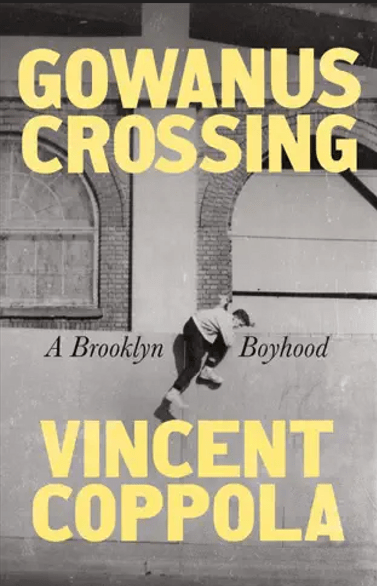
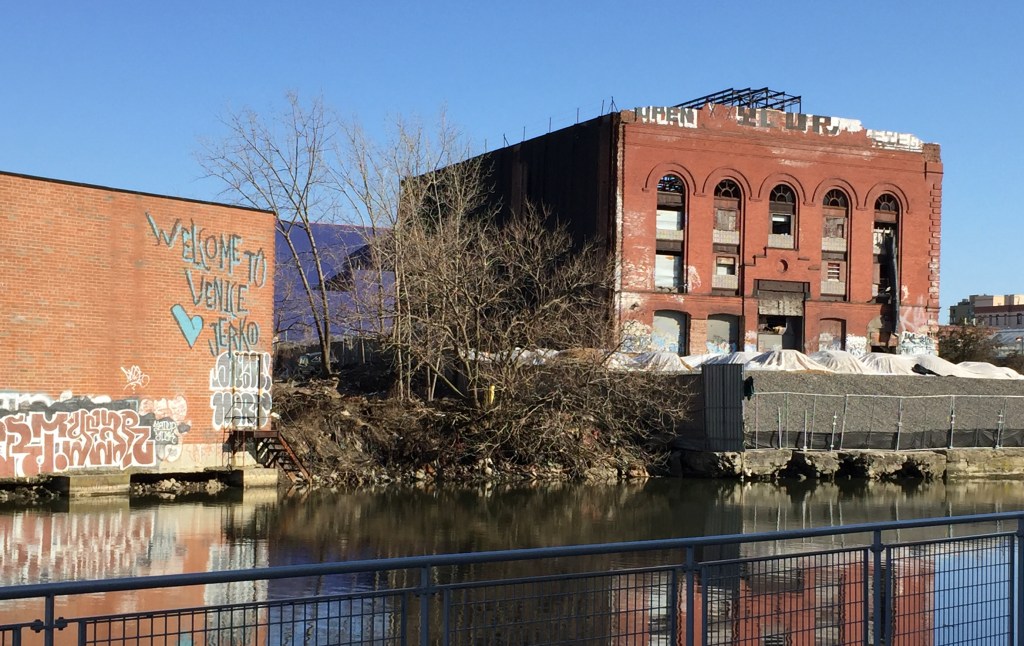
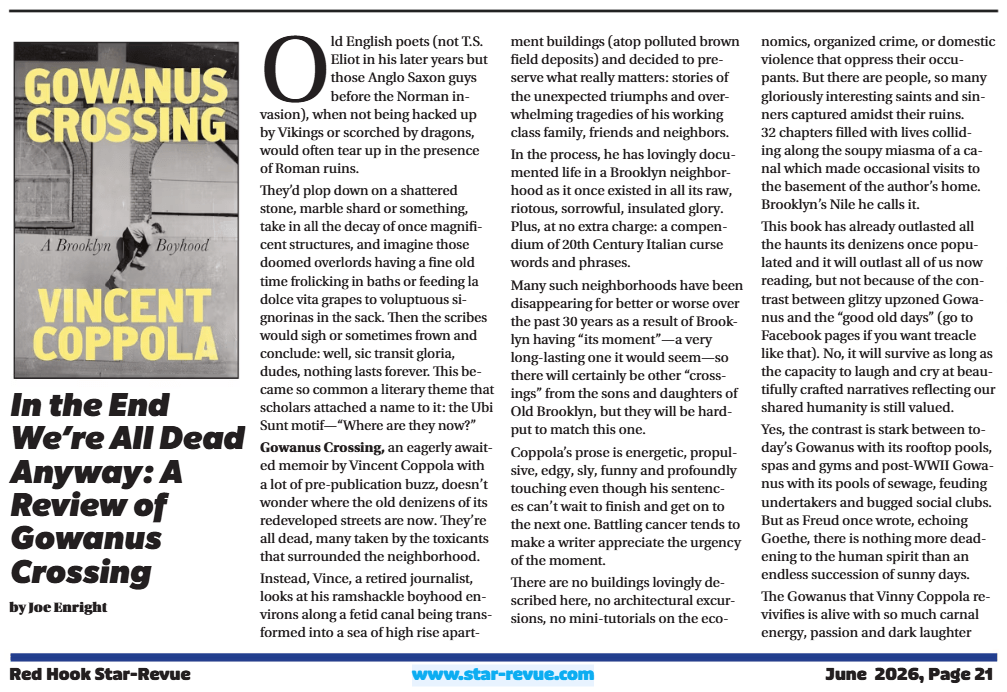
Gowanus Crossing, an eagerly awaited memoir by Vincent Coppola with a lot of pre-publication buzz, doesn’t wonder where the old denizens of its redeveloped streets are now. They’re all dead, many taken by the toxins that surrounded the neighborhood. Instead, Vince, a retired journalist, looked at his ramshackle boyhood environs along a fetid canal as it was being transformed into a sea of high rise apartment buildings (atop polluted brown field deposits) and decided to preserve what really matters: stories of the unexpected triumphs and overwhelming tragedies of his working class family, friends and neighbors. In the process, he has lovingly documented life in a Brooklyn neighborhood as it once existed in all its raw, riotous, sorrowful, insulated glory. Plus, at no extra charge: a compendium of 20th Century Italian curse words and phrases.
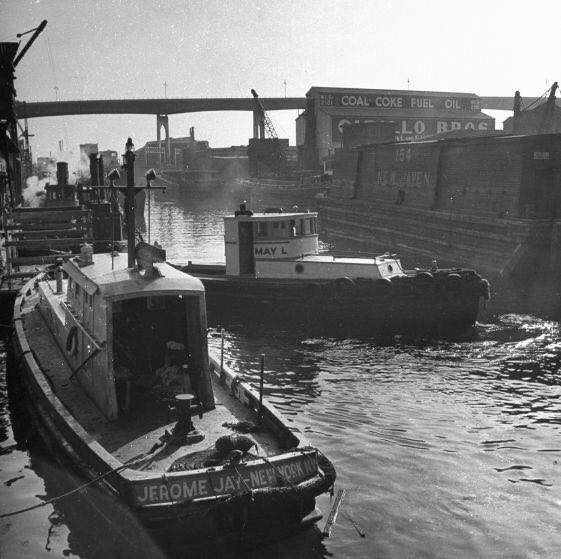
Many such neighborhoods have been disappearing for better or worse over the past 30 years as a result of Brooklyn having “its moment” – a very long-lasting one it would seem – so there will certainly be other “crossings” from the sons and daughters of Old Brooklyn, but they will be hard-put to match this one.
Coppola’s prose is energetic, propulsive, edgy, sly, funny and profoundly touching even though his sentences can’t wait to finish and get on to the next one. Battling cancer tends to make a writer appreciate the urgency of the moment. There are no buildings lovingly described here, no architectural excursions, no mini-tutorials on the economics, organized crime, or domestic violence that oppress their occupants. But there are people, so many gloriously interesting saints and sinners captured amidst their ruins. 32 chapters filled with lives colliding along the soupy miasma of a canal which made occasional visits to the basement of the author’s home. Brooklyn’s Nile he calls it.
This book has already outlasted all the haunts its denizens once populated and it will outlast all of us reading it now, but not because of the contrast between glitzy upzoned Gowanus and the “good old days” (go to Facebook pages if you want treacle like that). No, it will survive as long as the capacity to laugh and cry at beautifully crafted narratives reflecting our shared humanity is still valued.
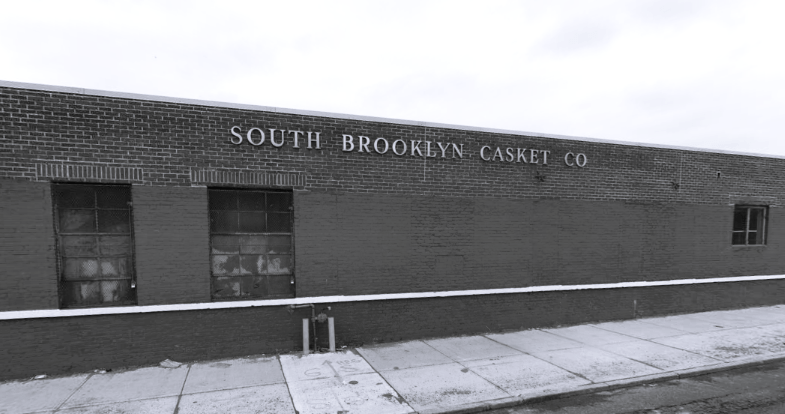
Yes, the contrast is stark between today’s Gowanus with its rooftop pools, spas and gyms and post-WWII Gowanus with its pools of sewage, feuding undertakers and bugged social clubs. But as Freud once wrote, echoing Goethe, there is nothing more deadening to the human spirit than an endless succession of sunny days. The Gowanus that Vinny Coppola revivifies is alive with so much carnal energy, passion and dark laughter that I found it hard to leave behind.


wherever we are
LikeLiked by 1 person