

In Hollywood movies when somebody gets the news they don’t have long to live, it’s usually delivered by a solemn doctor in a quiet room. Virginia got the word lying on an ER cot, located in a row of cots, deep inside the battle zone known as New York-Presbyterian Brooklyn Methodist Hospital. Virginia laughed when we first saw that sign, imagining the inevitable TV ad campaign: “Behold! Medicine Now Delivered With TWICE the Religious Power!!”
This was our third Emergency Department experience in the past six weeks (Methodist twice, Weill Cornell once) each one reinforcing Virginia’s desire to never ever return. But the stomach pain had other plans.

I stood next to her, my frame providing the only privacy she had. Across from us a disheveled prisoner, handcuffed to a gurney, was getting in touch with his inner feelings about the police officer guarding him, while a nearby middle aged gentleman was screaming in Russian something about Tolstoy. Or maybe it was Toy Story. By the wall, out of my reach, was a fire alarm. As the hours passed, how I longed to pull it as a siren wail for every long-suffering soul around us — doctors, nurses, aides, cops, prisoners and patients alike.
Suddenly a white-gowned Methodist doctor appeared by our side, sorting through papers. He looked up and sighed.
“Virginia?”
“Yes,” my wife nodded expectantly.
“Er…the doctor who you saw this morning got sick, so I’m here to let you know the results of the CT Scan.”
He spoke matter-of-factly, looking down at some report in his hand.
“The radiology expert found a five centimeter tumor on the tail of your pancreas, and about 20 smaller tumors on your liver. His diagnosis is pancreatic cancer metastatic to the liver.”
Silence. Somehow I heard myself asking, “What stage of cancer is that considered?”
“Fourth stage.”
Virginia wanted the bottom line: “How long do I have?”
“Probably less than a year, I’d say. But we need a biopsy to confirm it.”
Not admitted until midnight due to a shortage of hospital beds, presumably Virginia took precedence over those waiting with a mere 19 tumors. Wheeled to some orthopedic wing, she noticed a couple of rooms nearby were empty.
The biopsy four days later confirmed everything. The Methodist oncologist recommended really awful chemo treatments to forestall death for 10 to 11 months. The next day Memorial Sloan Kettering (MSK) recommended an absolutely beyond awful chemo regimen followed by an immunotherapy trial that promised her 18 months in all…if she survived the treatment.
Those slim hopes evaporated three days later when the cancer spread to her brain, causing double vision, trembling hands, little locomotion and confusion. An ambulance arrived at our home and we were soon in Mt. Sinai’s ER on Kings Highway, part of MSK’s “Cancer Network.” It was ten times smaller than Methodist, Cornell Weill, or Mt. Sinai’s Manhattan Campus. But it was just as crowded. Twelve hours later (bed shortage again) she was admitted.
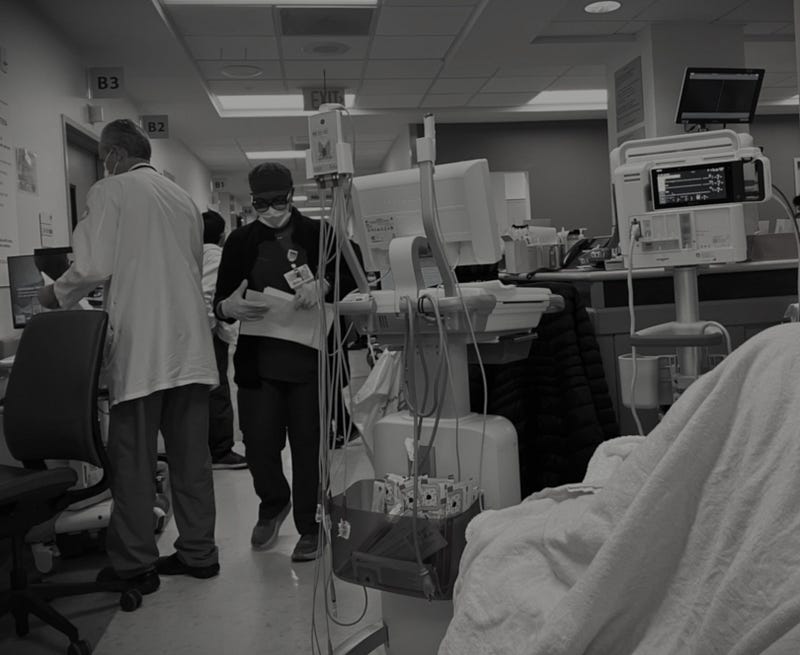
For the next week, Virginia was scanned, poked, prodded, cleaned and hooked up to drips. Incredibly, the MD “team leader” talked about releasing her to a rehab facility as if she simply needed to learn how to move again. Meanwhile we were bombarded with MSK emails reminding us of the chemo appointment she would never have. Despite phone conversations with “coordinators” and messages left online and off, the reminders continued.
After “the appointment that would not die” morphed into “the missed appointment we’ve rescheduled” (followed by double-dose reminders), the MSK oncologist called, explaining they had instituted a new computer system and none of my calls or messages had been communicated to him. Except for the Mt. Sinai brain scans. They showed the cancer was out of control and Virginia had “weeks, not months” to live. He urged immediate inpatient hospice care where she could be guaranteed IV pain medication around the clock. Despite the $40,000 long-term health insurance premiums Virginia had paid over the years, I was told nurses and aides might not always show up in Flatbush on time and that my rusty venipuncture skills were no match for maintaining morphine ports.
Soon another bumpy ambulance ride took us to Calvary Hospital’s Brooklyn enclave of 25 beds located on the fourth floor of NYU Langone, the hospital formerly known as Lutheran. Virginia joked that Lutheran was losing its religion but morphine gradually suppressed her sparkling wit.
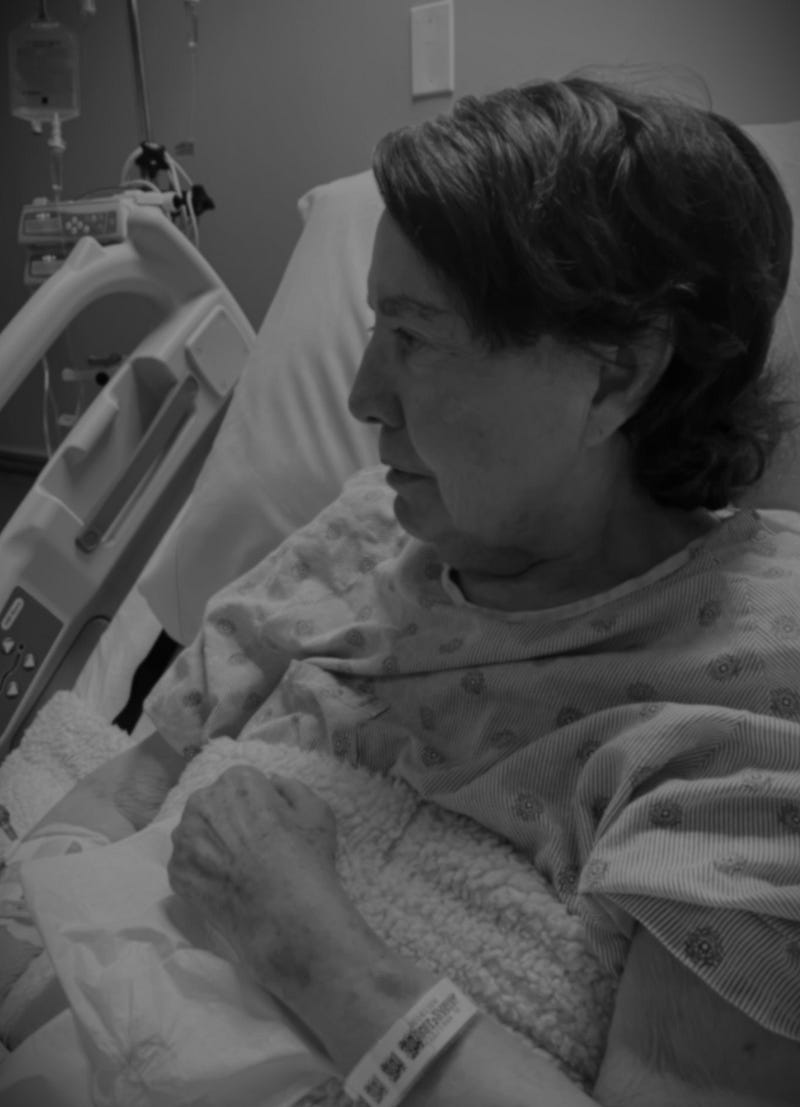
In all the pain and upsetment she endured, she cried only twice: in the anguish of realizing she would not live long enough to attend our son’s Fall wedding and again when imagining his sorrow as she said she’d soon be leaving him behind. And so James and his fiancée staged a faux wedding at Calvary, officiated by a female Baptist minister in a Catholic hospital where Orthodox Jews prayed in the next room while Russian, Caribbean and Irish nurses and aides looked on. Tears fell like rain. A week later, as James and I kept vigil at her side, Virginia died, only a month after her cancer diagnosis.
In the days that followed, I remembered how in the Fall I had to help her home from a block party and again from the Halloween Parade she’d been managing for decades. She attributed her feeling feint to the heat. Then she broke her wrist in a fall on the street. Driving her home, she blamed her trifocals. At NYU Langone in November, she asked the orthopedist if a broken wrist could cause pain in her stomach. Her general practitioner thought it might be gastritis and recommended an endoscopy.
In December I recalled her being sent to the Weill Cornel ER directly from the table where an outpatient colonoscopy/endoscopy was minutes away from being performed — because an AFIB episode had been detected (induced by the prep for the colonoscopy). Yet it was considered so minor that ER staff scoffed at the cancellation and the decision to dump her on their laps. Indeed a cardiologst at Mt. Sinai the next week opined that “thousands of scopes are performed every year without incident during similar or worse AFIB episodes.” The AFIB required her to get a cardioversion before she could reschedule the “scope” — another delay. And the scope showed no cause for the stomach pain. I was left to wonder why she didn’t get a CT scan of her stomach on our ER visit in early January instead of X-Rays. Would a diagnosis weeks earlier have given her enough time to start chemo and forestall its spread to the brain? And would she have survived it?
I know it would drive me crazy to keep pondering all these what-ifs. And so in the end I am left with a profound sense of gratitude for so many medical personnel who tenderly, lovingly tended to Virginia, often in hectic environments. But I can’t help wondering what’s gone wrong. Why is there no Moore’s Law for medical equipment that would make CT Scans as cheap as X-Rays and thus a first choice in ERs for diagnosing persistent stomach pain? Why do I get notified now of Medicare reimbursements for hospital treatments of Virginia allegedly performed 10 months before she was ever admitted there?
It’s been said that we as a country have descended into the last stage of decadent capitalism, when, for example, the leading brains of our time, instead of making important discoveries in physics or medicine, are studying gambling theory to better understand the securities markets where they work to pay off their student debt. The National Institute of Health — with 1,300 employees fired and two billion dollars of cancer research grants cancelled by Musk/Trump sadism — has found that “overcrowding of emergency departments in New York City is the most apparent symptom of a crumbling health care system.”
That was in 1990. The crumbling seemed pretty much complete to Virginia. But like the kind souls around her who soldiered on, she chatted up the aides and nurses and made the best of a bad deal for all of us.
 Joe Enright's Stuff